

CASC Futurist-in-Residence
Futurist-in-Residence Program 2026–2027
The future is not set in stone. By learning how to imagine possible futures together, we can design and work toward a better world for humans and all of our relations.
Overview
Deeper conversations about complex topics
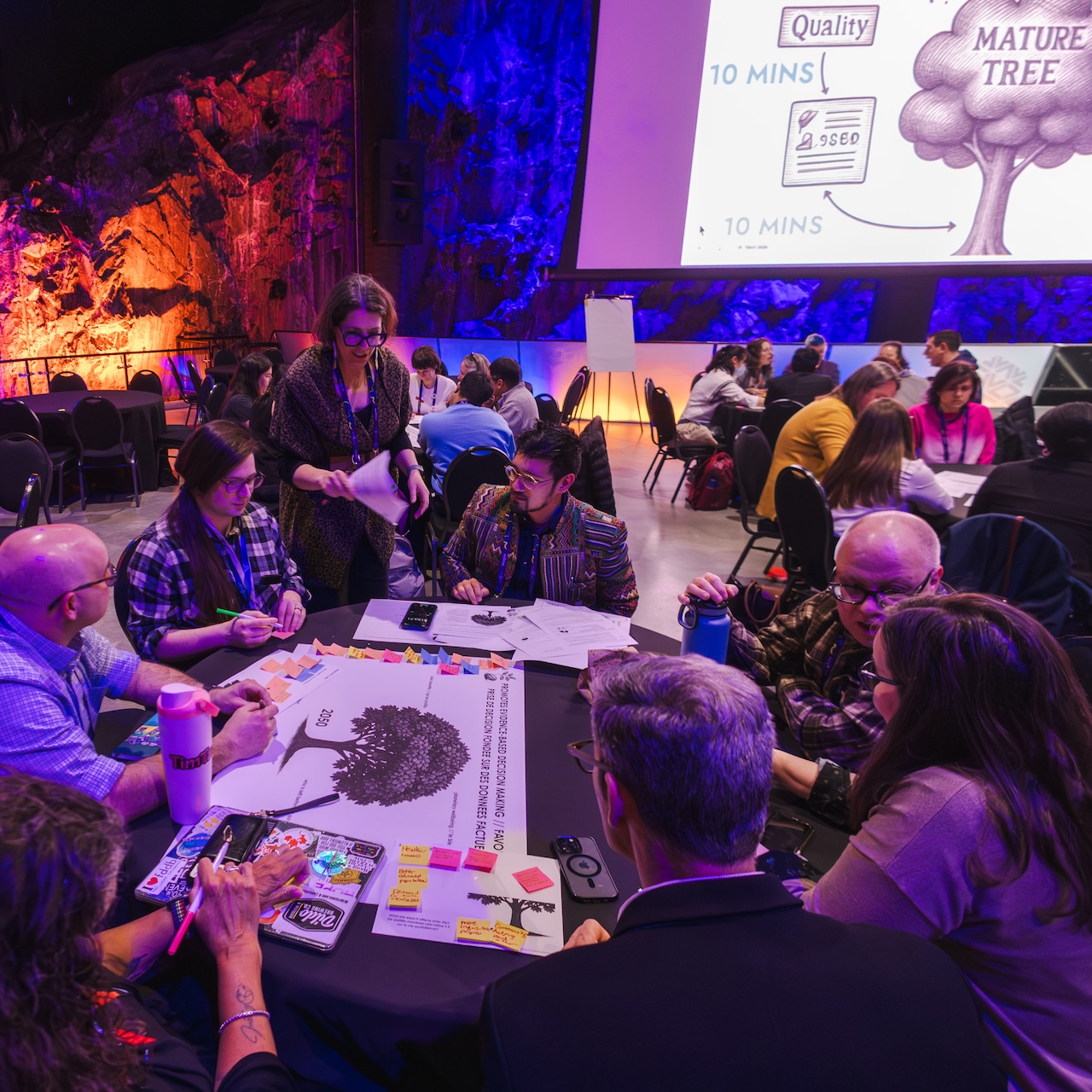
CASC’s first of its kind Futurist-in-Residence Program offers a lively, hands-on learning space to enable member organizations to have deeper conversations about complex topics, such as:
- Exploring the needs of visitors in future generations
- Developing exhibitions with longevity
- Making decisions that affect communities, environments, and future challenges
- Investing in future(s) skills for staff
The Futures Curious Program
Explore the futures of how society and science relate to each other!
Are you spotting new trends in science communication? How can you create future fictions? How do you imagine alternative futures? Did you know there’s a whole field of study about the future? Futures studies is a rigorous practice of examining change and evaluating its potential impacts. Find out how you can use it to make decisions in complex situations in your work!
Throughout the year, you’ll have many chances to build your research skills, such as:
- Robust research methods for studying complexity and change
- Identifying trends and major drivers of change
- Generating evidence-based scenarios to explore abstract concepts
This six-month-long program, supported by the Ontario Science Centre, offers several ways to learn as we study “Futures of Relationships between Science and Society”!

Scenario Sleuths – You are part of a team of researchers learning frameworks and fundamentals along the way as we investigate the knowns and unknowns of potential futures.
Horizon Scanning Squad – You are a signal spotter who always has their eyes open for stories about how society relates to science. We are too! We are setting up a system to learn what they might mean for our futures.
Futures Curious – You are working on a plan that is going to have long-term impacts. Come to a drop-in session to find a method that can challenge your thinking.
Maggie Greyson
The seeds of the future have already been planted.
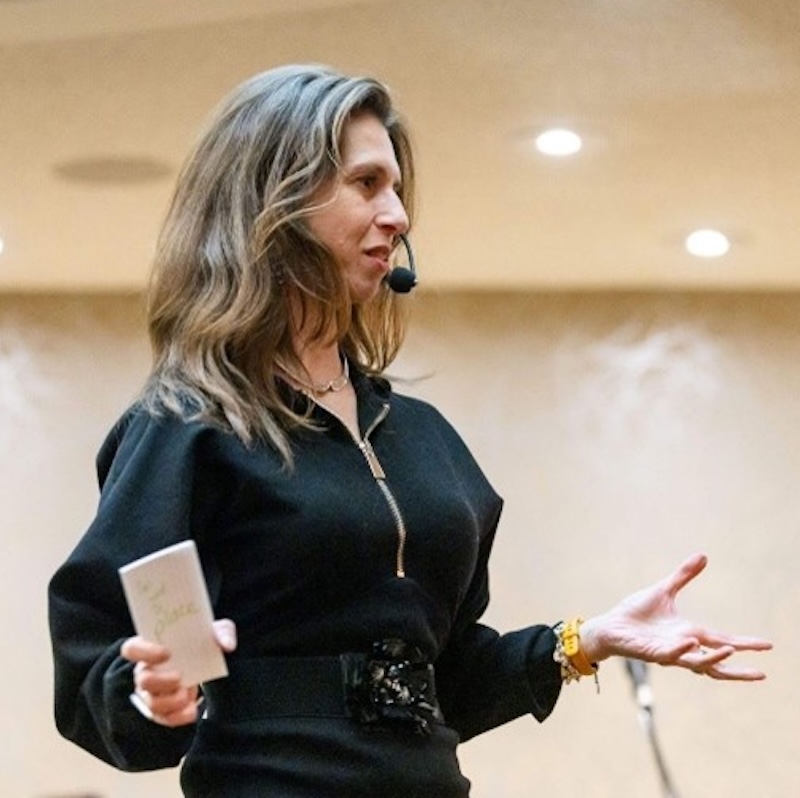
Futures studies is a field of tools and techniques for identifying and interpreting signals of change. This practice enables us to make more discerning decisions informed by long-term thinking about our most complex problems. Maggie Greyson MDes is helping to advance futures thinking and skill-building in science centres and museums around the world.
Futurist Maggie Greyson is an inspirational thought leader who has been using robust research methods and creativity to bring reality to future-oriented decision-making for over twenty-five years. She is renowned for her award-winning framework, Making Futures Present, which translates abstract, long-term scenarios into tangible artifacts and prototypes to help individuals navigate uncertainty and plan for alternative realities. Maggie also connects individuals and organizations with the academic field of Futures Studies, bringing clarity, accessibility and a thoughtful process to exploring the future. With a background in design (MDes, OCAD University; BFA, Concordia University), she has built her career co-creating experiences grounded in rigorous research for diverse publics. Her work as a researcher and facilitator supports communities in imagining, navigating, and shaping their futures. Together in diversity, participants can ask, “Is this the future we want?” And when done with care and inclusion, it creates an opportunity to take creative risks and move to alternative futures responsibly.
Maggie has held the position of Futurist-in-Residence, SA Water Visiting Research Fellow at the University of South Australia. She collaborated closely with the team at MOD. a world-leading futures-oriented museum, growing their methodology with advanced tools and frameworks for thinking systematically about the future. She is a Fellow of SMARTlab Academy and the School of International Futures. Before adding foresight expertise to her career, she worked in set and costume design, with companies such as the International Shakespeare Globe in London and the Stratford Theatre Festival. This residency supports her PhD research, “Making Futures Present: Enclaves of the Future, inspired by Futures-Oriented Museums & Futures Studies,” with SMARTlab Academy at Thomas Jefferson University and University College Dublin.
Please feel free to contact Maggie Greyson via email at [email protected] if you are curious about futures thinking and how it might enable discoveries untold!
- Reviewer: Cultivating Futures Thinking in Museums, edited by Kristen Alford and published by Routledge in 2024. Cultivating Futures Thinking in Museums provides examples of the active and diverse roles museums are taking to expand futures thinking in communities, using them as laboratories for futures literacy, community imagination, and participatory design.
- Keynote Speaker: Futures Festival: Worlds in the Making at ArtScience Museum in Singapore 2025
- Published researcher:
- Slaughter, R., & Hines, A. (2020). The knowledge base of futures studies 2020. Foresight International.
- Chapter title Design for the Abstract Qualities of Futures Studies
- Podcast guest: FuturePod EP 192 – An Honest Exploration of Uncertainty – Kristin Alford, Maggie Greyson & Elizabeth Merritt
- Affiliations: Board Member of the Association of Professional Futurists and FORMS the Futures-oriented museum synergies network.
Futures Present
Maggie Greyson, MDes, is the CEO and Chief Futurist at Futures Present, a Toronto-based futures and strategic foresight design-based practice. Partnering with us supports decision-makers in transformational thinking, enabling organizations to easily make more informed decisions in the present. Our work spans facilitation, training, and advisory across institutions in Amsterdam, Colombia, Australia, New Zealand, Singapore, Dubai, Malta, Canada, and the United Kingdom.
Futures Scenario Building
Evidence-based research: How might society’s relationship with science change in the future?
This residency involves co-creating three evidence-based future scenarios for science centres, museums, and science cultures in Canada. We’re excited to invite you and your peers from across the country to join a “transformative foresight” research process based in futures studies. Your experiences are what will make each scenario’s story relatable and useful! We’ll be working with frameworks and well-known tools that you can easily adapt for your decision-making about exhibitions, programming, and organizations.
This initiative began in April 2026 at the CASC annual conference, with 120+ attendees, in a workshop titled “The futures of science cultures”. We will pilot those scenarios in the fall with a small group of leaders in the sector before releasing an open-source toolkit.
Data collection
Name weak signals and emerging issues relating to science communication.
Robust analysis
Interpret trends, tensions, trust factors, and future implications.
Problem framing
Ask what matters most for long-term issues when we make decisions.
Evidence-based future scenarios
Build relatable futures that enrich exhibitions, programming, and strategy.
Knowledge-based decision-making
Rely on the process, evidence, analysis, and framing to align your purpose in complex situations.
Example activities at each stage
Data collection: How might we name the weak signals and emerging issues you’re noticing?
Robust data analysis: What might these trends help us to understand about people, the impact of our work, or tensions that might affect our reputation and level of trust?
Problem framing: Are we making decisions based on what is best in the long term?
Evidence-based future scenarios: How might we come to similar understandings of a complex and uncertain situation?
Get involved!
Everyone is welcome to participate in any or all online working sessions to learn how we are using foresight, innovation, and analysis to identify important questions about the “Futures of Relationships between Science and Society”.
Scenario Sleuths play a key role using qualitative and quantitative research methods to create scenarios of the future. Commitment between 4 and 8 hours a month.
Horizon Scanning Squad members are the pipeline to insights and create the foundation of knowledge. Casual participation 2-4 hours a month with optional monthly gatherings.
Please contact Maggie [email protected] if you are curious or ready to dive in!!
What will I learn?
- Find out what trends your peers across Canada are noticing
- Practice using futures thinking tools that you can use in your own work
- Be part of a bigger conversation about the future of science centres and museums in Canada
Participation, research, and consent
This residency is connected to Maggie Greyson’s PhD research on how museums and science centres talk about the future in a rigorous, professional way. Some activities, like office hours or the webinar, may also be research opportunities. If Maggie wants to use anything you share, such as quotes, stories, or examples, she will ask for your explicit consent, explain how your information will be used, and give you the option to decline or remain anonymous. You are welcome to take part in residency activities without joining the research, and your decision will not affect your access to the residency, office hours, or CASC programs.
Session Details
Futures residency kickoff webinar
Held Monday, September 28 · 2:00–3:00 PM Eastern
View Session Details- We looked at case studies of futures-oriented museums from around the world, such as the Museum of the Future in Dubai, the Museum of Tomorrow in Rio de Janeiro, and MOD. museum of discovery in Australia.
- Participants helped shape the programming for the monthly Futures Curious online drop-in sessions.
- We invited everyone to join the Scenario Sleuths and Horizon Scanning Squad to develop scenarios for the Futures of Relationships between Science and Society. It’s not too late: see how to get involved.
Futures Curious Drop-in Sessions
Monthly meet-ups to try out futures tools
Are you futures curious?
Futures and foresight professionals have spent decades improving research methods and ways of thinking about the future. This field combines art and science to help people make stronger, evidence-based decisions in complex situations. You may be using some of these tools already; learn how to combine them to get more clarity in uncertainty!
Strengthen your future-focused thinking skills.
We invite you to strengthen your future-focused thinking skills with CASC’s Futurist in Residence, PhD Candidate Maggie Greyson. Examine the skills and frameworks you already use to tackle your biggest unknowns (like measuring impact). Dive into tools, theories, and methods from design thinking, participatory action research, futures studies, and systems thinking to ask impossible questions.
Monthly meet-ups to try out futures tools
From September to March, this is a one-hour monthly drop-in session where CASC members can ask questions, share ideas, or talk about challenges facing their organizations and communities. Join peers from across Canada for one-off online meet-ups to find new insights by looking at your work in any aspect of the field from a fresh perspective.
This is for you! Share a few words about a challenge you’re facing, and we’ll shape each workshop around your questions. No question is too big or too small. For example:
- How might we reach 15-25-year-olds who don’t visit?
- How might we understand what life could be like if AI is controlling everything?
- How do we cut costs and build impact in our outreach?
| First Wednesday, Oct–Mar (Oct 14, Nov 4, Dec 2, Jan 6, Feb 3, Mar 3) | 12:30–1:30 PM Eastern · register in advance, all sessions recorded |
What are these drop-in sessions?
The Futures Curious drop-in sessions are monthly chances for CASC members to spend an hour thinking ahead and learning with Maggie. Each session is a lively space for quick futures exercises (e.g., prompts, scenarios, lenses), sharing what you’re seeing on the ground in your own community, and asking “what if…?” questions about programs, strategy, or partnerships. You don’t need any previous experience with futures work. All you need is curiosity.
Why attend?
- Access futures thinking tools tailored to science centres and museums
- Connect with colleagues who are planning for the long term, not just the next season
- Help shape how CASC understands and supports future-oriented practice